Vladka Meed
ולדקה מיד
1921–2012
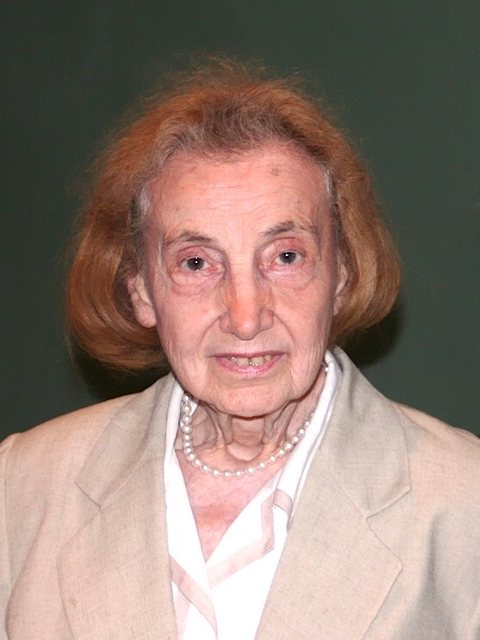
Vladka Meed (1921-2012), born Feigele Peltel in Warsaw, was a courier of the Jewish underground in occupied Poland who smuggled money, forged papers and dynamite into the Warsaw Ghetto. After emigrating to the United States in 1946 she became a leading Holocaust educator and wrote the memoir On Both Sides of the Wall.
Also known as Feigele Peltel, Feigele Peltel-Miedzyrzecki, ולדקה מיד
Born 29 December 1921, Warsaw, Poland
Died 21 November 2012 (7 Kislev 5773, yahrzeit), Paradise Valley, Arizona, USA
Life and career
Feigele Peltel was born in Praga, a district of Warsaw, the eldest of three children. At fourteen she joined the Jewish Labor Bund and in 1942 the Jewish Combat Organization. Her father died before the war and her mother, brother and sister were killed at Treblinka. Under a false identity as a Pole, she and her future husband Benjamin Meed helped organize the underground, bringing money, documents and aid to Jews in hiding, and helping children escape.
The Meeds married in 1945 and reached the United States in 1946. In 1963 they founded the Warsaw Ghetto Resistance Organization, and in 1981 she helped organize the World Gathering of Jewish Holocaust Survivors in Jerusalem; they founded the American Gathering of Jewish Holocaust Survivors in 1983. For nearly twenty years she ran summer study trips for teachers on the Holocaust and the Jewish history of Warsaw.
Her memoir was first published in Yiddish in 1948 as Fun beyde zaytn geto-moyer and appeared in English in 1972 as On Both Sides of the Wall, with a foreword by Elie Wiesel. She received the Elie Wiesel Remembrance Award in 1995 and honorary degrees from Hebrew Union College and Bar-Ilan University. She died in Arizona in 2012.
Known for
- On Both Sides of the Wall (Fun beyde zaytn geto-moyer) (1948)
- Founder, Warsaw Ghetto Resistance Organization (1963)
- Founder, American Gathering of Jewish Holocaust Survivors (1983)
On the program
1 program in the Jewish Soul Music archive feature Vladka Meed: see them all, or hear the recordings.
She was visiting Issachar Miron when she heard his musical memorial to his destroyed town of Kutno; deeply moved, she wrote Yiddish words to it and asked that the song be credited as anonymous.
Related performers
Sources
Biography updated November 2026.
Tap ▶ to play a whole program here, or its name to open it with its track list.