Mordechai Gebirtig
מרדכי גבירטיג
1877–1942
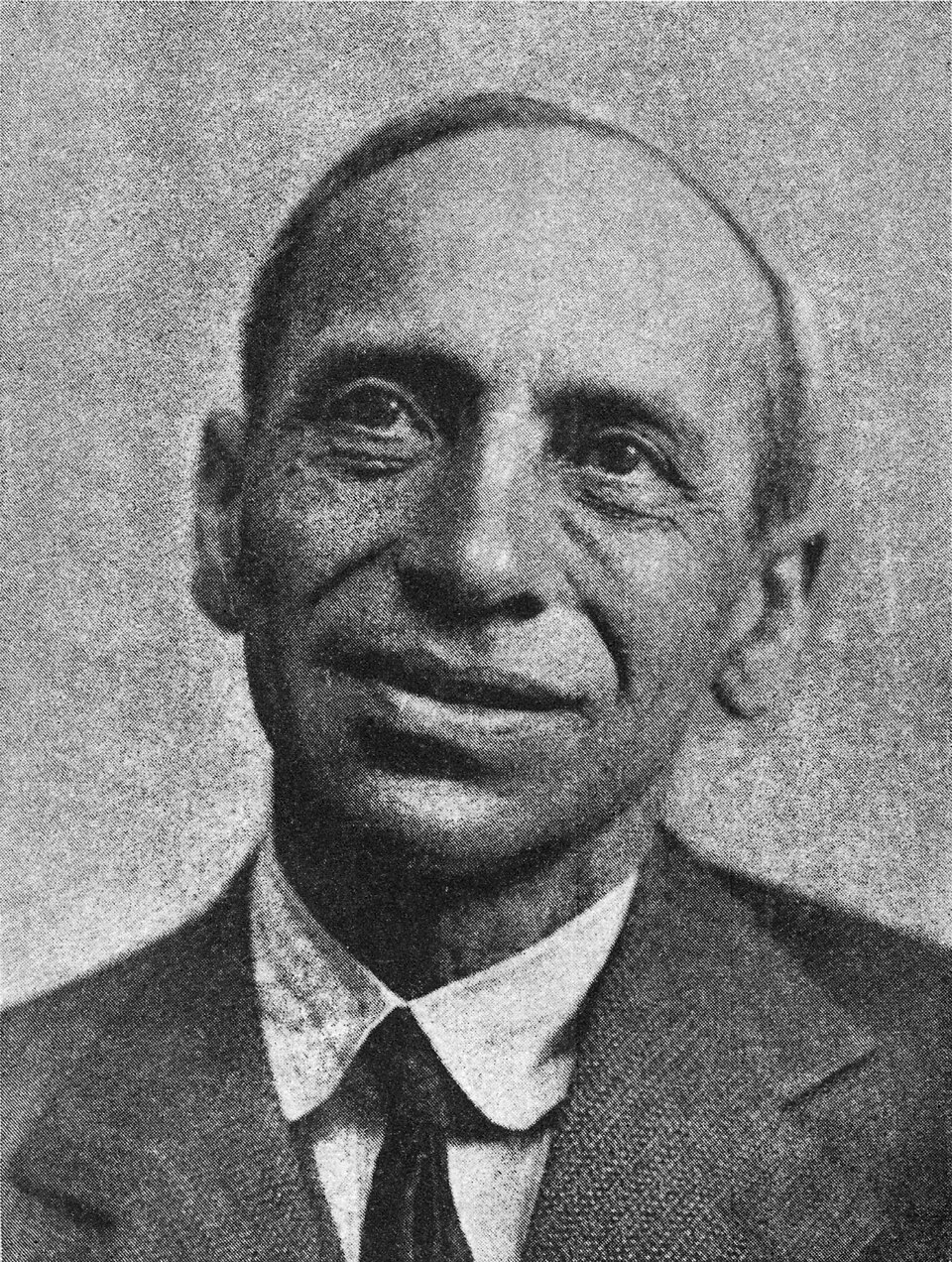
Mordechai Gebirtig (1877-1942) was a Yiddish poet and songwriter from Kraków who lived his whole life in the city's Kazimierz Jewish quarter and earned his living as a furniture worker. He is best known for "Es brent" ("Undzer shtetl brent"), written in 1938 after the Przytyk pogrom, and was shot in the Kraków Ghetto on 4 June 1942.
Also known as Mordecai Gebirtig, Mordkhe Gebirtig, Mordechaj Gebirtig, Mordecai Bertig, מרדכי גבירטיג, מרדכי געבירטיג
Born 4 May 1877, Kraków, Poland
Died 4 June 1942 (19 Sivan 5702, yahrzeit), Kraków Ghetto, Poland
Life and career
Gebirtig was born Mordecai Bertig in Kraków on 4 May 1877. He was self-taught in music, served five years in the Austro-Hungarian army, worked as a furniture maker, and belonged to the Jewish Social Democratic Party, which later merged into the Bund. His first collection of songs, Folkstimlekh, appeared in 1920, and he wrote and composed songs such as Reyzele, Moyshele mayn fraynd and Kinder yorn, many of which were sung in Yiddish theater and by ordinary people.
"Es brent" is his best-known song. Sources give 1936 (the year of the Przytyk pogrom) or 1938 for its writing. Its refrain urges the listener not to stand by with folded arms while the town burns, and the Kraków Jewish underground took it up as an anthem during the Second World War.
On 4 June 1942, called Bloody Thursday, Gebirtig was shot in the Kraków Ghetto during a Nazi action, along with the painter Abraham Neumann. His manuscripts of songs survived and have been published and recorded since.
Known for
- Es brent (Undzer shtetl brent) (1938)
- Folkstimlekh (1920)
- Reyzele
- Moyshele mayn fraynd
- Kinder yorn
On the program
26 programs in the Jewish Soul Music archive feature Mordechai Gebirtig: see them all, or hear the recordings.
Songs written by Mordechai Gebirtig
4 historic records in the archive credit Mordechai Gebirtig as composer or lyricist: hear them.
Sources
- Mordecai Gebirtig, Wikipedia
- Our Town Is Burning, USHMM
- June 4, 1942, Jewish Historical Institute
- Mordechai Gebirtig, Milken Archive
Biography updated November 2026.
1 recording in the archive
Tap one to hear it from the start of the song.
- Es Brent · Jan PeerceEpisode 659 (2023) · 7:13 download
Songs by Mordechai Gebirtig, sung by others (4)
Historic records whose labels credit Mordechai Gebirtig as composer or lyricist.
- Reizele · Sidor Belarsky with Lazar Weiner at the piano1940 · Musicraft · 78 rpm · 3:09 · Internet Archive
- Raiselle · Gizelle Fenyes with Henry Adler and His OrchestraHi-Tone · 78 rpm · 3:07 · Internet Archive
- Raiselle · Gizelle Fenyes with Henry Adler and His OrchestraHi-Tone · 78 rpm · 3:08 · Internet Archive
- Yankele (Gebirtig) · Mascha Benya, Henry Paykin (piano)Yiddishe Kinder · 78 rpm · 3:04 · Internet Archive
Tap ▶ to play a whole program here, or its name to open it with its track list.
- #659Revisiting the 2009 Internet Debut2023
- #622Breslov Niggunim and a Jan Peerce Hour2022
- #555AYom HaShoah and Yom Ha'atzmaut, 1981 Broadcasts2021
- #532Barkin and Malamood; Selichos in Jerusalem2020
- #524Yom HaShoah Remembrance, Rebroadcast from 19832020
- #512Yiddish Festival with Vintage Radio Commercials2020
- #509Golden Age Classics for the New Year2020
- #503Carlebach Remembered, Chaim Adler and Helfgot2019
- #489Richard Tucker and Jan Peerce: A Double Portrait2019
- #484Yiddish Classics, Shicoff and Shlisky2019
- #481Yom HaShoah 1990: Songs and Cantors of the Shoah2019
- #458Shlomo Carlebach Remembered After Pittsburgh2018
- #433Yom HaShoah Remembrance from 19902018
- #427For Women by Women, Korogatsky and Jan Peerce2018
- #388Bialystoker Sfira Maariv and a 1990 Yom HaShoah Show2017
- #375Tzlil V'Zemer, Yehuda Green and Old Cantorial Gems2017
- #373Chanukah Selections and the World of European Jewry2016
- #342Yom HaShoah: Songs and Cantors of the Churban2016
- #316Jan Peerce, Jackie Mason and Cantorial Classics2015
- #298Two Hours of Yiddish Song for Kulturfest2015
- #291Yom HaShoah 1981 and Yom Haatzmaut 1994 Replays2015
- #255Es Brent for Israel, with Sirota and Hershman2014
- #245Yom HaShoah: Songs and Cantors of the Holocaust2014
- #88Herb Zweibon Memorial and Golden Age Classics2011
- #48Pesach Eve: Seder Songs and Cantorial Classics2010
- #29Kristallnacht Remembrance and the Zim Family2009